

News Detail
Key Precautions for Using Fully Automatic Noodle-Making Machines in Production
1.Pre-Start Checks: Ensuring the Machine Is Ready for Operation
Before starting the machine, operators should conduct a thorough inspection:
Cleanliness: Make sure the dough mixer, hopper, rollers, and cutting units are free from any residue to avoid contamination or defects in the noodles.
Power and Fasteners: Check that all electrical connections are secure and that belts, chains, and fasteners are tightened to proper specifications.
Raw Material Preparation: Flour should be sieved, and water should be added according to the recommended ratio to ensure proper dough elasticity.
2.Key Control Points During Production
(1) Mixing Stage
Add ingredients evenly and avoid dumping large amounts of flour or water at once. Adjust the mixing time based on flour gluten strength to ensure a uniform dough texture.
(2) Dough Sheet Pressing
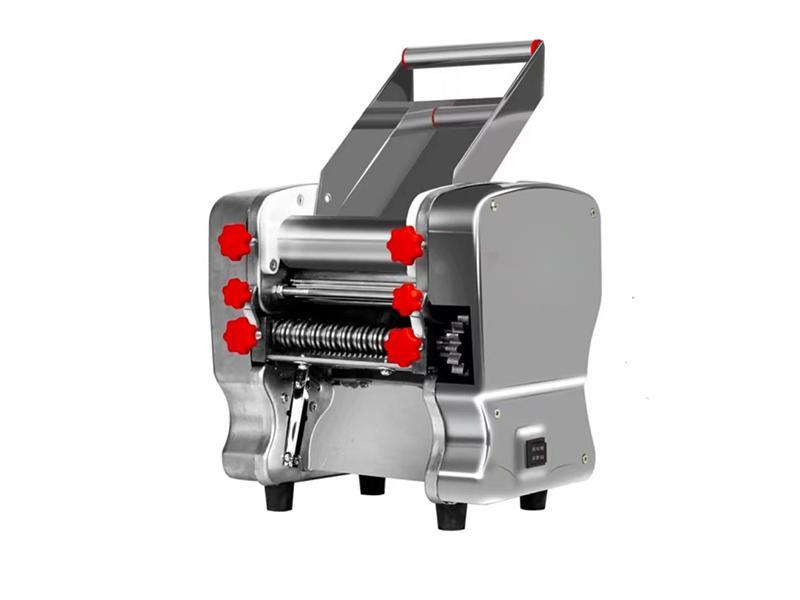
Start with a thicker roller gap during the first pass and gradually reduce the thickness. Keep the rollers clean at all times to prevent holes, spots, or tearing.
(3) Cutting Stage
Match the cutting speed with the conveyor speed for consistent noodle size. Always power off before changing blades, and keep the blades sharp to maintain clean, well-formed noodle strips.
(4) Conveying & Forming
Ensure the conveyor belt tension is appropriate to prevent slipping or misalignment. Monitor dough moisture—overly wet dough may stick, while overly dry dough is prone to breakage.
3.Production Safety: Protecting Operators and Equipment
Never reach into the machine or adjust components while it is running.
Operators should wear gloves and uniforms and avoid jewelry or loose accessories.
Stop the machine immediately if abnormal noise, vibration, or smell is detected.
4.Hygiene Management: Ensuring Food Safety and Product Quality
Use certified food-grade ingredients and clean water sources.
Perform routine cleaning after each shift, with weekly deep cleaning for key components.
Conduct regular product inspections to ensure noodle thickness, color, and texture meet standards.
5.Maintenance & Care: Extending Machine Service Life
Lubricate chains, bearings, and moving parts with food-grade oil according to the maintenance schedule.
Inspect and replace consumable parts such as belts, chains, and blades regularly.
Keep the electrical system dry to prevent short circuits and ensure stable performance.
6.Shutdown & Long-Term Storage
Before shutting down, stop feeding materials and allow the machine to empty the remaining dough. Disconnect the main power and clean the machine thoroughly. For long-term storage, apply anti-rust oil to metal components to prevent corrosion.
Conclusion
Fully automatic noodle-making machines bring significant advantages in production efficiency and consistency. However, proper operation, hygiene management, and routine maintenance are crucial to achieving high-quality noodles and ensuring stable long-term operation of the equipment.
If you need detailed configuration options, production line planning, or factory layout proposals, our team can provide tailored technical solutions and case studies. Feel free to contact us anytime!
Zhengzhou Yunhe Food Machinery Co., Ltd.
From material to size, from appearance to function, we can provide various products to meet your specific application needs.
Why Choose US
We are a company specializing in food machinery. We are equipped with advanced production technology and equipment, dedicated to pursuing excellence in quality and creating first-class products.
Our Advantages
Our machinery is user-friendly, with a fully automated food processing line that includes automation functions to precisely control the production process. This greatly enhances production efficiency and ensures stable output for processed food.
In terms of quality, we use high-quality 304 stainless steel, which is sturdy, durable, and has a long service life. Our machines also offer flexible parameter adjustments to meet the production needs for various food specifications and textures. Additionally, the equipment is easy to clean and strictly adheres to national safety and hygiene standards to ensure food safety.